
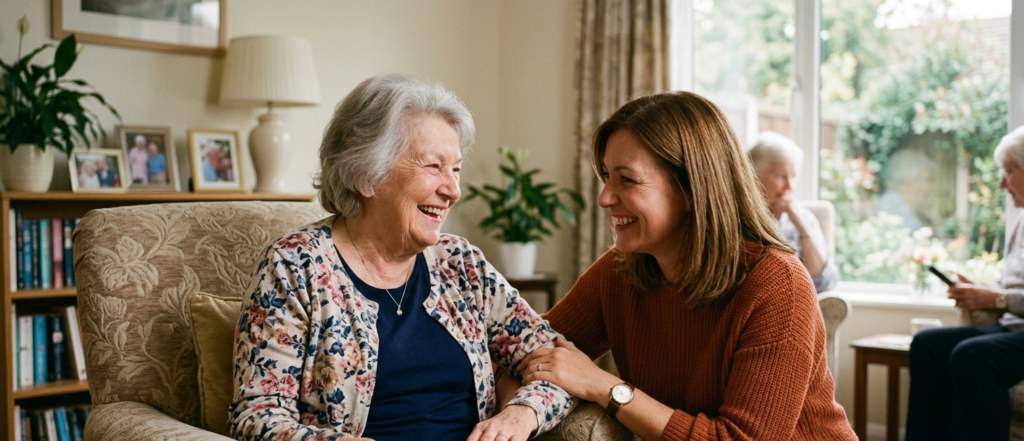
For most families, the decision to consider a senior retirement home doesn’t happen overnight. It builds slowly — a missed pill here, a stumble there, a pile of unopened mail on the counter — until one day you look at your parent and realize the home they’ve lived in for decades no longer fits the person they’ve become.
If you’re reading this, you’re probably already sensing that shift. You’re not alone, and you’re not wrong to be paying attention. Below are ten signs that families and care professionals consistently point to when it’s time to start the conversation about a senior retirement home — plus what each one actually means for your parent’s safety and quality of life.
1. Missed Medications or Medical Appointments
An occasional forgotten dose isn’t a crisis. But if you’re finding unfilled prescriptions, doubled-up pills, or a growing list of skipped doctor visits, it’s a sign that managing health on their own has become harder than they’ll admit. A senior retirement home with structured medication management removes the guesswork — and the risk.
2. A Noticeably Neglected Home
Take a look around next time you visit. Piled-up mail, spoiled food in the fridge, laundry that hasn’t been done, or a lawn that hasn’t been mowed in weeks are all signs that daily upkeep has become overwhelming. This isn’t about tidiness — it’s about whether your parent can still keep up with the basic tasks that keep a home safe and livable.
3. Unexplained Weight Loss or Poor Nutrition
Cooking for one is hard. Cooking for one while dealing with mobility issues, fatigue, or memory changes is even harder. If your parent has lost weight, keeps mostly empty or expired food on hand, or seems to be living on toast and coffee, nutrition has likely become a daily struggle rather than a daily routine.
4. Falls, Near-Falls, or New Bruises
Bruises your parent can’t quite explain, a cane or walker suddenly appearing, or a fall they downplay as “no big deal” are among the clearest warning signs. Falls are one of the leading causes of injury among older adults, and a home without grab bars, single-level living, or someone nearby can turn a minor stumble into a hospital stay.
5. Withdrawal From Friends, Hobbies, and Social Life
Loneliness is a health risk, not just an emotional one. If a once-social parent has stopped attending church, calling friends, or doing the hobbies they loved, it may be less about disinterest and more about the physical or logistical effort those activities now require. A senior retirement home rebuilds that social structure automatically — meals, activities, and neighbors are simply part of daily life again.
6. Trouble Managing Finances
Late payments, disconnection notices, duplicate charges, or unusual purchases can indicate that bill-paying and budgeting — tasks that require sustained attention and organization — have become genuinely difficult. This is also one of the earlier, subtler signs of cognitive change, and it’s worth taking seriously rather than assuming it’s a one-time slip.
7. Increasing Confusion or Memory Lapses
Getting lost on a familiar drive, repeating the same question within minutes, or forgetting recent conversations are different from normal aging. If these moments are becoming more frequent, a conversation with your parent’s doctor is the right first step — and a senior retirement home with structured routines and daily support can dramatically reduce the risks that come with memory changes, especially wandering and missed medications.
8. Caregiver Burnout in the Family
Sometimes the clearest sign isn’t in your parent — it’s in you or another family member. If you’re exhausted, resentful, losing sleep, or your own health and relationships are suffering because you’re stretched too thin providing care, that’s not a personal failure. It’s a sign the level of care your parent needs has outgrown what a family member can safely provide alone.
9. A Recent Hospitalization or Health Decline
A hospital stay — for a fall, an illness, or a surgery — often reveals just how much support someone needs to recover and stay safe going forward. If your parent is coming home to an empty house with no one checking in, the risk of readmission climbs sharply. A senior retirement home provides the daily oversight that makes a full, safe recovery far more likely.
10. Your Gut Is Telling You Something Is Off
You know your parent better than any checklist. If something feels different — if visits leave you uneasy, if you find yourself worrying between calls, if your instinct says “this isn’t sustainable” — trust it. Families often wait for one dramatic event to justify the decision, when in reality the accumulation of smaller signs is reason enough to start exploring options.
What to Do If You Recognize These Signs
Noticing one or two of these signs doesn’t necessarily mean it’s time to move immediately — but it does mean it’s time to start the conversation, both with your parent and with a trusted local care provider. The earlier you start exploring options, the more choice and control your parent gets to have in the decision, rather than having it forced by a crisis.
At Greystone Retirement Home in Portland, CT, we’ve spent over 20 years helping local families navigate exactly this moment — with private and shared accommodations, personalized daily support, and a community built around dignity, not just care. If any of these signs sound familiar, we’d welcome the chance to talk it through with you, answer your questions, and — when you’re ready — show you around.
Schedule a tour of our senior retirement home in Portland, CT →
FAQ
How do I start the conversation with my parent about moving to a senior retirement home? Start early, before a crisis forces the decision. Focus on safety and quality of life rather than “giving up independence,” and consider involving their doctor, who can frame the conversation in medical rather than emotional terms.
Is it normal to feel guilty about considering a senior retirement home for a parent? Yes — most families do. It often helps to reframe the decision: moving a parent somewhere they’ll be safer, better nourished, and more socially engaged is an act of care, not abandonment.
What’s the difference between a senior retirement home and a nursing home? A senior retirement home focuses on daily living support — meals, medication management, personal care, and social activities — for seniors who don’t need 24/7 skilled medical care, which is the focus of a nursing home.